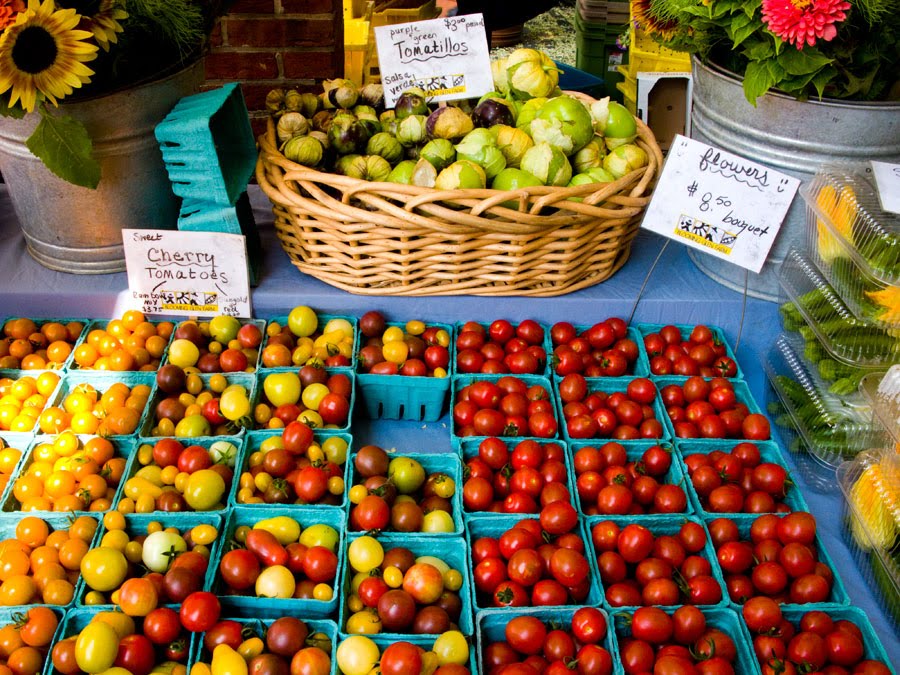
Showing posts with label three springs. Show all posts

Thursday, November 03, 2016

Hard Cider On Tap for Three Springs Fruit Farm

Sweet cider now, hard cider next month
By the time the Headhouse Farmers' Market closes for the season Dec. 18 Ben Wenk plans on selling hard cider made on his family's Three Springs Fruit Farm in Adams County.

He's been thinking about making hard cider ever since he and his father, Dave, first sold their produce at Headhouse when the Food Trust's big market opened in 2007.

"After our first day at Headhouse my dad and I decided to have a celebratory drink at what is now Cavanaughs," explained Wenk. "I got whatever tap handle I didn’t recognize and I ordered Strongbow, thinking it was a beer and not realizing it was a cider."

Ben had tried hard ciders before, like Woodchuck, but found them too sweet for his taste. But he and his dad both enjoyed the drier example. "Dad turns to me and said, like, we can make this sometime. So later that year bought used bourbon barrels and started experimenting."

Since then Wenk has taken cider much more seriously, and three years ago began planning his own commercial cidery, with help and support from some of his neighbors, including Big Hill Cidery up the road. For pressing his apples into juice, Wenk brings his bins over to Lem Christophel who runs Eden Garden Farm in nearby Dillsburg (and sells his crop at the Clark Park Farmers Market, also, like Headhouse, operated by the Food Trust).

Cider can be made from "dessert" apples, those meant for fresh eating, and it will be good. But Ben's long-term plan is to take advantage of classic cider varieties, most of which are too bitter or astringent to be appealing in a lunchbox. 

So in 2013, after considerable research, Ben ordered a variety of cider apple trees to plant. They arrived and were planted last year, and may produce a few useable apples next season, but Ben isn't figuring on a significant yield until three or four years from now. A good cider, like a good wine, takes time.

Wenk explained there are four basic classifications used by the British (his inspiration in cider-making): sweets, sharps, bittersweets and bittersharps. Among the varities he's planted, some British in heritage, others American, are Dabinett, Stoke Red, Somerset Redstreak, Chisel Jersey, Harry Masters Jersey, Frequin Rouge (a traditional French variety), Brown’s Apples, Granny Winkle (an American apple, advertised as early as 1803 by a Burlington, New Jersey, nursery), Roxbury Russet and Wickson's crab. Among the more common sweet varieties Wenk plans on using are  Golden Russet and Albemarle Pippin (also known as Newtown pippin).

This season's hard cider will get much of its oomph from two dessert apples, one which has been a standard for the past few years, Gold Rush, and another which Wenk planted a few years ago and is just now bearing fruit in sufficient numbers, the Esopus Spitzenburg. The former is an extraordinary juicy sweet apple developed in the 1990s in a joint program by the Indiana, Illinois and New Jersey experimental agricultural stations, the latter, one of the oldest North American apples, another good juice producer with a complex flavor.

"Both Gold Rush and Spitzenburg are high in acid and brix [a measure of sugar in liquids), so they're good apples to blend," said Wenk. The sugar content is important, not so much as to add sweetness to the final product but to provide food for the yeasts that turn apple juice into hard cider.

By itself acidity doesn't make a good cider; but acids with a tannic quality do. Tannins add dryness, astringency and texture to the final product, and that's a quality many traditional cider varieties have in abundance. While his cider trees grow toward production levels, Wenk is experimenting by adding other fruits and botanicals with tannins to his mix: dry hops, chokeberries, "and similar substances to get that really bitter characteristic into our blends."

Although Wenk regards cider both in its production methods and taste qualities as closer to wine than beer, he buys into the experimentation American craft brewers are noted for and applies it to his cider.

"We take English cider makers as our inspiration," he said. Indeed, English farm tradition provides the name for his cider: "Ploughman", as in "Ploughman's Lunch," the traditional midday meal of pickle, bread and cheese.

"Like most American craft producers we use traditional methods but like the opportunity to experiment". Not orange creamsicle, he's quick to add, but he will "take the best of what’s on the farm and put it it in the bottle. If blackberries are good one year, we’ll add those. We're taking  a winemaker's approach in creating a cider that a craft beer drinker would like." He hopes to add "terroir appeal" by experimenting with natural yeasts, "an expression of the soil the apples grown in," although right now commercial yeasts provide the consistency he needs.

Wenk plans to sell the cider at the farmer's markets he frequents, including Headhouse here in Philadelphia, other markets in Pennsylvania close to his Adams County base, and to taverns in Washington, D.C. He also plans to sell to kegs to Philadelphia restaurants where he currently supplies fruit.

Wenk sees cider as one more attraction to lure visitors to Adams County, beyond the battlefield at Gettysburg. 

"I think hard cider in the U.S., especially east coast, has really grown up.  We want to make Adams county a destination to visit and drink cider in," said Wenk.

Sunday, October 23, 2016

Apples to keep

The Esopus Spitzenberg apple
Ben Wenk and I spend nearly five minutes at this morning's Headhouse Square Farmers Market discussing apples and cider, and one variety in particular that he is selling for the first time this year, the Espopus Spitzenberg.

Ben, who brings his family's Three Springs Fruit Farm output in the Adams County, Pennsylvania, fruit belt, to markets here, in Maryland and the District of Columbus, was quick to note the apple was Thomas Jefferson's favorite.

It's one of mine, too, and not only because of its flavor and storage qualities. As I noted in a post five years ago, when I purchased the variety from North Star Orchards, the apple is named after the Esopus Creek in Ulster County, New York. I took many a dip in this icy-cold, rocky waterway in the northern Catskills during family vacations in the 1950s. The Espopus is a favored trout stream and also feeds into the New York City water supply through the nearby Ashokan Reservoir.

The apple offers great balance between sweet and tart, with a honey-colored, crisp and spicy flesh and a orange-dappled skin. The Espopus Spitzenberg's complex flavor is matched by its pleasant aromatic qualities, making it an excellent "dessert" apple, one that's meant to be eaten as is (though it's a good cooking apple, too). It's not an easy apple to grow, however, and prone to just about any disease that strikes other apples.

Like many late season apples, it 's a "keeper" which, like a fine wine, improves with age; the apple you put in the crisper today will be even deeper in favor come late January and February.

Ben had a full bin of another "keeper" today at Headhouse: the Arkansas Black. perhaps the hardest, crispest apple I've ever tasted. It might lose a bit of that crispness after a few months of storage, but it will still be suitably crunchy. As it stores it will even become darker in color, as well as develop a waxy finish. Unlike the Esopus, however, it's a rather one-dimensional apple in flavor: all sweetness, with little apparent tartness. Still, it's a tasty apple with admirable qualities. Although it's parentage is a mystery, the Arkansas Black is probably descended from the Winesap.

If Ben still has them next week I'll buy a big bag of Esopus Spitzenbergs for my crisper. But the "keeper" I'm waiting for is the Newtown Pippin, another variety that improves immeasurably after a few months in storage. North Star Orchards usually has them in November. As a rule, the later in the season an apple matures, the better it is as a storage apple. The Newtown Pippin will soften just a tad in storage and it's skin may wrinkle a bit, but it's fine eating.

Tuesday, August 12, 2014

Saturn Peaches

 Saturn peaches, a.k.a. donut peaches, area in season along with the standard varieties. These were being sold Sunday for $5/quart by Three Springs Fruit Farm at the Headhouse Farmers' Market.

Sunday, June 29, 2014

Gooseberries and Currants

Two related fruits -- gooseberries and currants -- made their seasonal debuts at the Headhouse Farmers' Market today.

They represent the two main edible fruits within the genus ribes. (The dried currants you buy in a box for adding to baked goods isn't a currant at all: it's a species of grape.) Three Springs Fruit Farm offered gooseberries in two colors (top photo) and currants in three (photo at right) at today's market.

Gooseberries, particularly early season specimens, are best in jams, preserves and baked applications, becoming sweeter later in the season when they're more suitable for fresh eating. The red, pink and black currants can be used interchangeably in jams, preserves and baking, though the pink variety would be less attractive, to my thinking. The currants, in particular, are astringent so except when used to accompany savory dishes, they usually require sugar. In coming weeks we may see some jostaberries from Beechwood Orchards. They are a cross of currants with both American and European varieties of gooseberry.

Since I'm a sucker for most things Scandinavian, thanks to the Nordic heritage of She Who Must Be Obeyed, I may pick up some of the black currants next weekend to make Rødgrød, a pudding serverd with cream. The Danish classic requires cooking in some water, straining to remove the seeds, then bringing the juice and sugar to a boil, turning down the heat to a simmer to add either cornstarch or potato starch until it becomes a nice syrup. After chilling in individual serving bowls they are to be served with heavy cream, plain or whipped.

Cherries Jubilee, For Now

Sour cherries from Three Springs Fruit Farm at Headhouse Square Farmers' Market

Sweet cherries from Three Springs
Ben Wenk, orchardist extraordinaire at Three Springs Fruit Farm in Adams County, warned it may only last a week, but the sour cherry season was in full glory at today's Headhouse Square Farmers' Market.

Wenk was selling gorgeous quarts of the tart baking cherries for $5, which is as inexpensive as I've seen them in a couple of years, at least. A few stalls down in the Shambles Dave Garretson of Beechwood Orchards, also an Adams County fruit belt orchardist, had them for $7. Based on what both growers told me earlier this month, I was expecting a very short supply of sour cherries, and higher prices, perhaps as much as $10/quart.

Red sweet cherries were also available from both growers, $4.75/pint at Beechwood, $6 at Three Springs. White (yellow) cherries sold for $5/pint at Beechwood, $6 at Three Springs.

Both growers were selling red raspberries for $4.50-$5 a half pint. Across the Shambles, Tom Culton had the studier black raspberry for $7/pint.

I came home with four quarts of sour cherries, two pints of red sweet cherries, one pint of Rainiers (white/yellows), one-half pint of red raspberries and two pints of black raspberries. Plus more tomatoes from Queens Farm and shelled English peas from Culton.

I'm going to be busy the rest of the afternoon:
  • The peas will once again become a cold salad with ranch dressing, the tomatoes will go on sandwiches and in salads.
  • The red raspberries will be eaten macerated atop ice cream or perhaps mixed into yogurt.
  • The black raspberries will be macerated with sugar, then pressed through a tamis and join up with heavy cream, a couple tablespoons of vodka and a bit of Karo in my ice cream machine. Once done I'll swirl in mini chocolate chips before "ripening" the ice cream in the freezer.
  • Half the sour cherries will become sorbet, the other half a cobbler


Thursday, June 26, 2014

Cherries, Blueberries, Raspberries Arrive

Beechwood Orchards
On the first Headhouse Farmers Market after summer solstice produce stalls were full with cherries, blueberries and even a few raspberries.

The sweet cherries were a bit of a surprise, given that this year's crop will be lean. Prices hovered around $8.50 a quart (at the Reading Terminal Market, Ben Kauffman's Lancaster County Produce was asking $9.99).

Although the red cherries tasted bright, sweet and fresh, they weren't 60 percent better than the $2.99/pound commercial Washington State Bings purchased later in the week at the Cherry Hill Wegman's. While the store-bought fruit wasn't quite as intense in flavor, it was close enough and just as sweet; the individual fruits were also larger, though that's a tertiary consideration as far as I'm concerned. The sweet cherry, it appears, is one of those fruits that can be shipped cross-country, when properly packaged, successfully.

The local orchardists say the sour cherry crop is also slim and hence will be pricey, too, when it shows up in another week or so. Dave Garretson of Beechwood Orchards said he has a too few early variety sour cherries to make harvesting worthwhile, but expects to bring in mid-season Montmorency pie cherries when they're ripe. Beechwood also offered Rainier sweet cherries last Sunday, priced slightly higher than the sweet reds.

Queens Farm tomatos
Wanna buy some superfruit? Well, blueberries are back, $4.75/pint at Beechwood. Three Springs Fruit Farm had them, too, along with the season's first red raspberries. I've been enjoying the blues in yogurt for breakfast this week. Ben Wenk of Three Springs expects good crop of raspberries this year, especially the black variety. He cultivates both but said the wild raspberry patches he's seen are full of fruit.

The early tomato crop from Queens Farm remains tasty. Although pricey at $3.60/pound for its mixed heirloom varieties, they are a pure taste of summer.

Just in time for gin and tonic season, limes continue their downward price trend. Over at the Reading Terminal Market this week Iovine Brothers Produce has been selling nice-sized and heavy fruits at 20 cents a piece, a far cry from the buck (or more) apiece limes commanded in early spring.

Another crop making its seasonal debut at Headhouse Sunday: sweet corn. South Jersey farmer A.T. Buzby was selling its at 75 cents an ear.

Last Sunday may have been the last we'll see of English peas and strawberries, but there's a chance some farmers in cooler climes may have them. I took the $5 pint of sweet and fresh shelled peas purchased from Tom Culton and turned them (after the briefest boiling and then shocking in ice water) into a salad with some diced and well-fried Irish bacon, thinly sliced shallot rings, shredded gruyere cheese and homemade ranch dressing.

Here's a quick tour of some of the more photogenic produce seen at Headhouse last Sunday:

Summer yellow cukes from Savoie Organic Farm
Radishes in two colors from, iirc, Weaver's Way
Chard from Blooming Glen Farm

Red onions from Tom Culton


Sunday, June 15, 2014

I Love June

Three Springs Fruit Farm at Headhouse
In April we see small, nearly-hidden harbingers of what's to come: fiddleheads, ramps, perhaps morels if we're lucky. Then in May the bounty starts with cool-weather crops like lettuces, greens, and, late in the month, our first fruit: strawberries.

Now that it's June the welcome crush of produce has commenced.

The strawberries are peaking and will remain in their full glory for at least another three or four weeks, getting us through the Independence Day weekend with cakes, ice cream, tarts and just mixed with yogurt or eaten plain. The quality has been excellent once we got beyond the early crop. The berries I picked up the last two weeks from Beechwood Orchards, both at the Headhouse and Fairmount farmers markets, have been excellent: red to the core, sweet, flavorful, juicy. Prices, however, have held steady at $7/quart from most vendors, with an occasional offer of $5.50. I have no doubt pints and quarts from vendors other than Beechwood are just as good. The Wenk family's Three Springs Fruit Farm, like Beechwood located in Pennsylvania's Fruit Belt in Adams County, north and west of Gettysburg, also was selling good-looking berries today at Headhouse. So was A.T. Buzby from South Jersey's Salem County, as well as smaller farmers. But as is almost always the case, the best deal on local berries is at the Reading Terminal Market, where L. Halteman Family Country Foods sells them for more than two bucks less a quart.

Chinese lettuce
Cool-weather lettuces are also plentiful. One of the most unusual is the Chinese lettuce sold by Queens Farm at Fairmount and Headhouse. The dense firm stalk can be stir-fried or added to soups, though I'm not a fan. What has been delicious from Queens Farm is its tomatoes. We're still a month away, at least, from the real tomato crop, but Ed Yin has brought in a taste of late summer before the solstice arrives. He starts out his heirloom varieties under plastic but in the ground, rather than a hothouse. Queens Farms is also the place to buy oyster mushrooms and Asian greens.

The prior Sunday I went mad buying sugar snaps and snow peas. I passed by one stall and grabbed a pint of sugar snaps and brought them back to the car. Then I headed back under the Headhouse shambles and found snow peas, forgetting all about the sugar snaps I just purchased, and bought a pint of those, too. I never bothered to cook any of them. Some were consumed out-of-hand, others dressed with either a vinaigrette or mayo-based dressing. I'm thankful our houseguests during the week helped me go through them. That allowed me to pick up a pint of yellow string beans from Tom Culton at today's Headhouse market, along with Chiogga beets.

Another late spring treat from a number of vendors: red new potatoes. I turned a pint from Culton to a simple potato salad, but they'd be great boiled or steamed to accompany a slab of salmon.

Culton's cornichons
Cucumbers have been showing up with some regularity, both the traditional "garden" variety and kirby cukes, ideal for pickling. Last week I bought a pound and a half of Culton's "cornichons", though they looked like kirbies to me. After three days in a simple salt brine (with fresh dill, lots of garlic and some coriander seeds) they were ready.

She Who Must Be Obeyed loves red radishes, and there were plenty to choose from today at Headhouse. I picked up a bright red, white and green bunch of French breakfast radishes from Savoie Farm today.

Hull peas, a.k.a. English peas, have also been available since last week, both in the hull and shelled. Culton was selling the latter like hotcakes today at Headhouse, and other vendors offered them, too. They'd be a great veg (and a New England classic) to go along with that salmon and potatoes, especially if you use lots of butter. For those who really enjoy shelling legumes, Culton and Queens farm are selling Fava beans.

Speaking of legumes, Iovine Brothers Produce at the Reading Terminal Market has had fresh chick peas (garbanzos) for a few weeks, $3.99/pound. Shell them and briefly boil them as you would English peas. I passed them by only because I had just defrosted a container of cooked dried chick peas I made a couple months ago. Kauffman's Lancaster County Produce also offers shelled peas.


Friday, July 12, 2013

Peachy-Keen

Peaches and pineapples at Iovine's: only one is local.

Ben Wenk restocks peaches
Time to shift to peach pie from cherry.

With the sour cherry season essentially over (you might find a few quarts this weekend if you're lucky) peaches have taken over the fresh produce stalls at area farmers markets. Local peaches can even be found at Iovine's Urban Produce at the Reading Terminal Market, where Jersey peaches were selling for 99 cents a pound recently.

Ben Wenk of Three Springs Fruit Farm had them at his family's stall last Sunday at Headhouse Square, and all the other orchardists are likely to show off their whites and yellows this weekend. Nectarines won't be far behind, and apricots have already made their appearance. Plums of various persuasions (and perhaps even early apples, like Lodi) will show up in the stalls over the next few weeks.


Wednesday, September 05, 2012

Catching Up: Headhouse

I've been caught up in the late summer doldrums, so it's been almost a month since my last post. There's a lot of catching up to do.

Let's do it by photos, with commentary where warranted.

Savoie Farms adds a bit of levity to its tomatoes.
Three Springs Fruit Farm mixed cherry tomatoes and mini eggplants for a pretty picture
Beechwood Orchard's plums have been spectacular this season
Tom Culton has featured lima beans the past few weeks
Rainbow chard always makes a good photo.
These are from Blooming Glen.

Headhouse News Note

Tom Culton says he planted his mirai corn late this year, so if you've missed it that's why. It should show up in the next week or two. Mirai is a Japanese hybrid which is exceptionally sweet and tasty. In late August Tom had a red sweet corn variety, for which is charged a buck an year. The going price this year at farmers' markets has been 50 to 75 cents.

Monday, July 09, 2012

Bonanza of Peaches, Apricots

Ben Wenk of Three Springs Fruit Farm stocks more peaches
They cherries may be done for the year, but the procession of stone fruits marches on at local farmers' markets.

Sunday at the Headhouse Square market Three Springs Fruit Farm and Beechwood Orchards presented both white and yellow peaches, and rosy, appetizing apricots. Beechwood also had some nectarines, which Ben Wenk of Three Springs plans to harvest this week. Blueberries, raspberries and blackberries also filled farmers' tables.

Definitely time for some cobblers!

Last week, with tomatoes now tasting real, I made some gazpacho to bring to our Fourth of July block party. I got my recipe from behind the pay wall at Cooks Illustrated, but there are similar recipes you can find on-line. What made this version striking was that it was creamy -- without the addition of any cream. That's accomplished by whizzing about two thirds of the tomatoes (along with green pepper, cucumber, red onion, garlic and crust-less white bread) in a blender, then dribbling in olive oil to emulsify the soup. This makes all the other versions I've tried look like watery salsa.

Sunday, July 01, 2012

Cherries Almost Done

Jostaberries at Beechwood Orchards
Dave Garretson of Beechwood Orchards, selling today at Headhouse Square Farmers' Market, says don't count on seeing any local cherries this time next week. In past years he's brought in some from New York State, which run a few weeks later than ours, but he's goint to skip extending the season that way.

Today he was the only vendor I spied with cherries -- none were visible at Three Springs Fruit Farm, the other usual stall carrying them and where I picked up a quart of Montmorencey pie cherries last week. Garretson had both sweet and sour cherries today. The red and rose sweets were selling for $4/pint or $7.50/quart.

I took advantage of the sour cherry season while I could, since they tend to be here for only a few weeks: three quarts of sorbet, a couple cobblers, and a tart. Time to move on to blueberries and blackberries. (The raspberries look good, but too pricey for anything but a garnish or mixed with yogurt when they're $4.50 for a half pint.)

The last few weeks fruit vendors have been featuring a number of different gooseberries and their close relations. Last week Beechwood had Jostaberries, a triple cross of North American coastal black gooseberries, European gooseberry, and black currant. Best in cooked applications or jams and preserves.

Some of Beechwood Orchard's stone fruits
Other varieties of stone fruit are supplanting cherries now: peaches, plums and apricots. The peaches I picked up yesterday at Fair Food (from Beechwood) had good flavor, though just a tad watery. I expect they'll intensify with the weather we've had lately.

Although they don't usually show up for another week or so, since every other crop is advanced this season, why should apples be different? Beechwood had Lodis (best for sauce and cooking rather than eating out-of-hand) for $2/pound today.

North Star Orchards, which specializes in apples and pears, usually doesn't start selling at Headhouse until August. Maybe if their crops are as early as everything else seems to be this season, we'll see them back in a few weeks.

Sunday, May 20, 2012

Headhouse Produce Roundup

 Profusion of Strawberries, Early Zucchini and Peas

With its position at the head of the Headhouse Shambles, Blooming Glen Farm does boffo business
Strawberries-by-the-pint were plentiful and reasonably priced at today's Headhouse Square farmers market, ranging about $3.50-$3.75. A.T. Buzby and Beechwood Orchards offered the best deal, however, with quarts selling for $6.50.

Zucchinis made their first appearance of the season at both Culton Organics and Buzby. Tom Culton sold out early, but at 1 p.m. Buzby still had some at $1.50/pound.

Culton had tons of long, beautiful asparagus ($7.50/pound, iirc), lots of radishes (as did just about every other vegetable farmer), some broccoli, tiny beets with pristine greens ($3/bunch: buy them for the greens, not the beets), and snow peas at $5/quart. The star of Culton's offerings, as far as I was concerned, were the tiny shelled peas, $5 for a half pint. I tasted a few raw and they were as sweet as could be.

Lettuces and other salad greens filled farmers' tables, too. I picked up some head lettuce at Blooming Glen and perfect looking endive at Weaver's Way.

Traffic at the market seemed quite variable. More than one vendor told me that they'd go from being slammed with long lines at one moment, to no one five minutes later, only to be slammed in another five minutes.

The two orchardists at the market, Dave Garretson of Beechwood, and Ben Wenk of Three Springs Fruit Farm, said sweet cheeries are only about two weeks away, with sour pie cherries a week or so behind that.

Tuesday, April 03, 2012

Farmers' Report: Early Asparagus, Some Apple Damage

A mild winter and very warm spring caused Mother Nature to alter her schedule for regional farmers.

Two regular farmers' market stalwarts, Dave Garretson of Beechwood Orchards, and Ben Wenk of Three Springs Fruit Farm, both indicated that while frosts after blossoming caused some damage to their groves of apple, pear and cherry trees, the loss will be noticeable but not devastating. I spoke with them Sunday at the Philadelphia Farm & Food Fest at the convention center, co-sponsored by Fair Food and the Pennsylvania Association for Sustainable Agriculture.

Wenk has already harvested a little asparagus for his family's use, but expects to cut a lot more beginning this week. It's conceivable, he said, that it will be all gone by the time the Headhouse Square farmers' market opens May 6. If the season extends by a week or so, he will still have asparagus available then.

Tom Culton, also at the festival, said he does expect to still have asparagus when Headhouse opens.

If you're hankering for local asparagus now -- the supermarkets are full of thin stalks from Mexico -- maybe a trip Saturday to either the Clark Park or Fitler Square year-round markets will be in order.

And unless the weather intervenes, you can expect to see strawberries in early May.

Garretson said he's altering the Philadelphia farmers' markets he'll be attending this season. He's leaving the Tuesday market at South & Passyunk sponsored by Farm to City, but joining the Thursday afternoon Food Trust market at Fairmount and 22nd Street, where he takes over from Orchard Hill Farm of Bloomsburg. Beechwood will continue to sell at University Square on Wednesdays, Rittenhouse Square on Saturdays, and Swarthmore on Saturdays.

Monday, November 14, 2011

Pippins and Winesaps

Newtown Pippins from North Star Orchards
There were apple varieties galore at the Headhouse Square farrmer's market yesterday at the three primary apple vendors: Three Springs Fruit Farm, Beechwood Orchards, and North Star Orchards.

When it comes to antique (a.k.a. heirloom) varieties, North Star always has a few surprises. This week I picked up an apple I've been waiting for: the Newtown Pippin. This is a green but sweet-tart apple native to the Mid-Atlantic region (it's named after Newtown, which is a neighborhood deep in the heart of Queens: perhaps you've crossed Newtown Creek while snailing along the Brooklyn Queens Expressway en route to a Phillies-Mets game.

The beauty of the Newtown Pippin is its storage quality, indeed, this apple improves with age. North Star's Ike Kerschner said he picked his crop a month ago, but is only now bringing them to market because they weren't ready to eat then. But they'll get even better in a few months. Kept loosely bagged in the refrigerator these will make especially fine eating come January and February when most other apples will be well-passed peak flavor.

Another interesting variety from North Star this week was the Reinette Simerenko, a tart Eastern European variety for a welcome change of taste. North Star has a fine web site that includes spot-on descriptions of their apple varieties.

Golden Russet is yet another variety you are unlikely to find at the Acme, or even Wegman's. I bought some more this week from North Star. They are far from the classic red apple, but well worth seeking out, with a pear-like flavor and texture. Great with a good cheese, like Birchrun Hill's Fat Cat washed rind comestible.

Over at Beechwood Orchards (they also have a website with apple descriptions worth consulting) Stayman Winesap and Northern Spy were my apples of choice. Both are older commercial varieties (19th century). Although either can be eaten either raw or cooked, I find the former tops for consuming fresh, the latter best for pies, tarts and other applications involving heat.

Beechwood also had the original Winesap, which is a tad tarter than its Stayman offspring. I like it better for cooking than eating though it can be used either way. It's also a good "keeper" for two or three months. If you're into drying your own fruit, sliced Winesaps are ideal for schnitz.

Three Springs Fruit Farm isn't into the antiques, but Ben Wenk and family still offer a nice selection of commercial varieties. I'm not a big fan of Honeycrisp (too one-dimensionally sweet to me taste), but it's a favorite among a lot of apple shoppers, and Three Springs has them as well as Staymans and other popular varieties. (And if you want a taste of summer through the winter, buy some of their canned peaches: delicious.)

About apple storage: As mentioned earlier, I keep my Newtown Pippins in the fridge, along with all other apples. While some fruits improve with room temperature storage to come to proper ripeness, apples don't and will deteriorate. Keep them in the crisper either loose or very loosely bagged, allowing them to breath. If you like to eat your apple at room temperature, take them out no more than a day before you intend to consume them.

Sunday, June 19, 2011

 Beechwood Orchards at Headhouse
Berries and  Cherries

Summer's bounty of  berries and cherries could be found at most markets this weekend.

Over at Beechwood Orchards at Headhouse I purchased $5/quart pie cherries, which I'll transfom into sherbet and/or cobbler. Beechwood also had them at Rittenhouse yesterday. Another stone fruit also made a Beechwood appearance, apricots, at $3.75/pint. Dave Garretson didn't have many, but expects more in coming weeks.

Beechwood's sweet cherries (red or the yellow-pink Rainiers) were $7/quart, compared to Three Springs Fruit Farm's $8 (two pint price) for reds. Kauffman's Lancaster County Produce sold reds Saturday for $6.99/pound, which translate to about $9/quart. His Queen Annes were pricier, at $7.99/pound.

(Garretson said he sells Rainiers rather than Queen Anne's because the latter are easy to "fingerprint," i.e., they bruise as soon as you pick them with your fingers.)

Blueberries from local growers are also in season, whether they come from the commercial (but nonetheless quite tasty) South Jersey growers ($3.75/pint, iirc) or farmers market vendors (about $5/pint).

Raspberries, both red and black, could also be purchased. Beechwood's cost $5 for a half-pint box. Some vendors still feature strawberries for $6-$7/quart.

Asparagus has disappeared for all practical puposes, but there are lots of other veggies to replace them. Summer squashes are abundant, and eggplant is now available, too -- $1 apiece for Sicilian or regular at A.T. Buzby's Headhouse stall today. Green and yellow string beans, sugar snap peas, sweet or English peas (shelled or still in the pod), garlic scapes, cucumbers (regular "garden" cukes, kirby cukes for pickling and "seedless" varieties. The last type makes fantastic "quick" Scandinavian style pickles to serve alongside cold salmon. Boiled new potatoes (also abundant at local markets) makes another excellent accompaniment to that salmon. And you've got lots of choice in greens for both cooking and salads. Beets and turnips are also widely available.

Leafy herbs -- parsley and cilantro among them -- are also easy to find now, as are spring onions.

If you can't wait another month, corn is available but you'll pay dearly. Buzby had white ears today priced at 75-cents apiece. I'll wait for peak season when even Tom Culton will occasionally sell his (including the mirai variety) at less than half that price.

Sunday, July 18, 2010

Direct from Sheboygan


I thought the only food item for which Sheboygan, Wisconsin could claim fame was bratwurst. Seems they've got some tomatoes, too. Blackbird Heritage Farms featured them for $5/pound at today's Headhouse Square Farmers Market. At that price, however, too expensive for sauce making. According to Blackbird these large paste tomatos were brought to Sheboygan by Lithuanian immigrants.

Less pricey tomatoes could be found at some of the other vendors. Blooming Glen (left) had field tomatoes for $3/pound, with Sun Gold and Red cherry tomatoes for $3.50/pint, rainbow mixed cherries for $3.75. I plan to pair the rainbows with some avocados for dinner tonight. Weaver's Way had heirlooms for $4/pound, cherries for $4/pint. A.T. Buzby's field tomatos were $5/quart, which looked to be about 10 medium-sized fruits. Noelle Margareum was selling her field tomatoes for $3.95/quart.

The pepper season has begun in earnest, too. Blooming Glen had sweet frryers for $3.50/pound. At Buzby's the peppers were priced per fruit: cubans 2/$1, green bells 2/$1.50. Tom Culton's sweet heirloom peppers were $4/pound. Celery has also made its appearance, $2.50 for each thin but incredibly fresh bunch at Blooming Glen. Corn, of course, could be obtained at Buzby, 75-cents near or $6/dozen. Their musk melons were $3.50 apiece. Culton also offered Laratte fingerling potatoes at $5/pound, haricot vert (string beans) at $5, and tiny Italian artichokes for $7. Savoie Farm had a couple varieties of potatoes at varying prices. Limas in the pod were $2.50 at Queen's Farm.

And of course there is a profusion of eggplant. Culton's heirloom varieities, pictured here, are $3.50/pound. Most of Blooming Glen's varieties (Italian, Asian, pink) were $2/pound, but Rosa Biancas were selling for $3.50. Buzby's deep purple variety was $1.50 per fruit, which probably weighed in just shy of a pound.

Fruits proliferated. Culton's organic nectaries were a buck apiece.

Over at Three Springs Fruit Farm, peaches were $2.49;pound, apricots $4.50/pint, donut peaches $5/pint. Their blueberries and blackberries were $4 a half-pint, raspberries $5. They and Beechwood Orchards had Lodi apples (the latter also had Jersey Macs); Three Springs' pples were $1.99/pound, Beechwood's $2.50.

Beechwood's Dave Garretson (left) had the better deals on some of the fruit, tthough peaches were essentially the same at $2.50/pound with nectarines the same price. Plums (two or three varieties), donut peaches and apricots were all $3.50/pint or $6/quart, blueberries $4.50 for a full pint, blackberries $4, raspberries $4 a half-pint. Margarum's blueberries were even cheaper, $3.50/pint.

Sunday, June 06, 2010

More Summer Veggies

Sugar snaps and various summer squashes were much in evidence at the Headhouse Square Farmers' Market today.

Although leafy greens predominated at most vegetable stalls, Culton Organics featured large, brightly-colored varieties of yellow summer squash along with garlic scapes and a few other items. Blooming Glen's sugar snaps (sampled once I got to the car) were fresh and sweet. Savoie Farms had some new potatoes; in previous weeks they only had seed potatoes from last year. A.T. Buzby displayed excellent-looking medium-sized Kirby cucumbers, crispy-fresh whether eaten as is or pickled; these are the first of this season's Kirby crop I've seen. Buzby was also selling South Jersey hothouse tomatoes.

Buzby didn't have any strawberries, at least when I arrived at 11 a.m. The strawberry season is just about over, but Beechwood Orchard and Three Springs had plenty, Dave Garretson of Beechwood was selling his for $6/quart.

With the warm spring, other summer fruits have already started to appear. Garretson brought a few apricots and raspberries to Headhouse (they quickly disappeared); Dave said he could have picked a few cherries, but decided to pass them by. Expect to see more of the stone fruits as well as raspberries starting this coming week.

Saturday, November 21, 2009

June in November

When winter arrives, I'm a big fan of frozen fruit, particularly berries. Nothing like some tasty, sweet and tart blackberries to mash up with a full-fat yogurt for breakfast.

With its recent expansion the Fair Food Farmstand at the Reading Terminal Market has more room in its freezers, so it's added another fruit to its small frozen selection: strawberry puree. The one-pound packs from Green Meadow Farm, a delicious looking red, are priced at $5. I haven't tried them yet, but I can't imagine theyd be anything but excellent.

Another summer fruit you can enjoy in winter are peaches. Canned peaches from Three Springs Fruit Farm (one of the vendors at Headhouse) can also be found at Fair Food; I went through a few cans last winter and thoroughly enjoyed them.