Showing posts with label reading terminal market. Show all posts

Tuesday, November 01, 2016

Franks A Lot: Not Really

The name of the stall is Franks A Lot, but they don't have a lot of franks. And the franks they do have are cooked in about the worst way possible, heated rollers, like you'd find in a convenience store.

I'm a hot dog snob so I've given up getting a tube steak here. But there's plenty else to choose from, and all of it is a better choice.

Hot dogs make up only one-eighth of the space on the stall's menu boards, the rest of it filled with various barbecued and fried chicken offerings, burgers from beef or turkey, kielbasa and Italian sausage, meatballs, pierogies, and various sides, including cornbread and mac 'n cheese. After a brief experiment the stall gave up on salmon burgers.

I haven't sampled the complete menu, but the potato pierogies are the real deal. Maybe not quite as good as what you'd find in certain Port Richmond establishments, but close enough. Likewise the barbecued chicken will satisfy; not quite the same style as you'd find at Dienner's in the Pennsylvania Dutch section of the market, but equal in quality.

Friday, October 28, 2016

Gupta reflects on 16 months leading the market

Anuj Gupta in chefs whites at recent Harvest Festival
A lot of the small stuff – but very important stuff – has been changing at the Reading Terminal Market. Things like adding a bolstered schedule of events at the market's kitchen, recipe cards using ingredients from market merchants, a wider social media presence, and more frequent evening programs and events. And then there's the stuff that never changes – the myriad details to keep the market operating smoothly, working with the market's board in selecting new vendors when the rare vacancy occurs, and managing the market's landlord-tenant relationships with its 80 vendors.

All this and more are on the plate of Anuj Gupta, who took over as general manager of the market 16 months ago. As Gupta sees it, his job is to build on the solid foundations left behind by his predecessor, Paul Steinke, who now runs the Preservation Alliance for Greater Philadelphia.

Gupta's overriding goal is to "recenter the market into Philadelphia’s culinary world and put it on top again."

That's a challenge, especially with the opening of the new, enlarged Whole Foods off the Parkway which, through its design, tries to mimic the Reading Terminal Market with shop-like areas for meat, fish and cheese, a food hall-like eating area, and stalls operated by local restauranteurs. Other competitors nipping at the market's heels include MOMs Organic Market, which is slated for the new East Market Street development at 11th street, just around the corner, and the ever-expanding Snap Kitchen prepared food chain.

To compete Gupta believes the market must make the customer experience as good as it can be.

One step in that direction is a service half-heartedly tried with little success about a dozen years ago at Iovine's Produce Market: bag storage. Gupta is bringing it back, under the "Shopper's Concierge" moniker, but thinks with additional promotion and services it can succeed where it's predecessor failed. 

"I've shopped here for many years as a regular Saturday morning customer, and I stopped when I couldn't carry anymore," he said. "I would have bought more if it was easier to get around."

The weekend-only (for now) concierge service, located behind the Head Nut near the Shoe Doctor and rest rooms, will store your purchases as you shop, including those that must be refrigerated, and, on Saturdays, bring them out to your car when you're done.

Gupta acknowledges there's no guarantee the new service won't fail like the earlier one, but "we’re going to keep doing it. I’ve realized how long it can take for things to adapt here, to merchant or customer behavior. Maybe in the long run it doesn’t work, and if it doesn’t we’ll get rid of it. But it’s impossible to try something for even three months and come to any conclusion."

Communicating the market's offerings is an important part of the effort, and the market has upped its game in the social media arena. Christen Rhoadarmer, a graphic designer Gupta added to the market's small management staff is also charged with generating social media contents and works with Gupta to produce the market's live video feeds, usually interviews with vendors, on Facebook.

Key among the benefits Gupta inherited from his predecessor is the market's solid financial footing.

Before taking on his new post Gupta led the Mount Airy USA community development corporation where, like many non-profits, "I could not fundamentally change the dynamic of every two weeks trying to make payroll, which bills I could pay, which bills I couldn't." Although proud he left the organization in better financial shape than when he arrived there, he's thankful for the strong financial condition of the Reading Terminal Market. "While we raise money here, we do it for special capital projects, it’s not for our survival," he said. "And that’s huge relief. I’m able to spend my time on my job, that’s a tremendous benefit to any non-profit organization."

One capital project recently completed is "invisible to customers but has great impact top market’s operation." That's a closed-water loop which functions as a heat removal system for the basement, a non-ventilated, non-air conditioned space where temperatures could become unbearable with the heat thrown off by all the refrigeration units supporting the main floor vendors.

Work to capture that heat started under Steinke and followed through under Gupta's leadership. With the completion of the project this past July, "everyone who has refrigeration equipment has to link into it, taking the hot air previously dumped onto the floor into the water discharge. It’s already had an impact." With the excess heat now helping to heat the market's hot water system, it "opens up a lot of additional possibilities of using space downstairs, and there’s still a vast amount of space that we don’t use because it’s been so unbearable."

On the customer front, the market is working with the hospitality school at Temple University to develop an "ambassador" program. When implemented, Temple students will wander the floor of the market helping visitors find merchants and directing them to services.

Gupta is also working with Drexel University to develop a better way to convey the market's past.

"The market's history is rich in so many ways: architectural, operational, the legacy of family owned businesses, the diversity of our customer base," he said. "You don’t get any sense of that in a formal way when you come here."

(In his conversation with me, Gupta overlooked illustrated history of the market on the wall of the Rick Nichols Room at the rear of the market by Molly Molloy's and Center Court. But few folks take the time to read the history, which the retired Philadelphia Inquirer journalist wrote.)

Still, Gupta laments that "most people don’t even know it was an operating train shed. When out-of-towners come and I give them a tour I tell them when you bought the Reading Railroad in playing Monopoly, you also bought this building. They’re quite surprised." 

Vendors on Videos

Nick Macri of La Divisa interviewed by Anuj Gupta as Christen Rhoadarmer handles video feed

Earlier this autumn the Reading Terminal Market inaugurated a series of "Ask the Experts" videos on its Facebook page, featuring market merchants discussing the specialized items they sell. RTM General Manager Anuj Gupta conducts most of the interviews, but retired Philadelphia Inquirer columnist Rick Nichols also leads some.

The videos are fed live on Facebook, but you can find an archive of the "Ask the Expert" series – as well as videos from the market's City Kitchen cooking demonstration series – on the RTM's FB page. Here's a quick compendium of links to the "Ask the Experts" videos posted so far.

Amy's Place, kitchen supply store.

La Divisa Meats, fresh red meats and charcuterie.

Mueller's Chocolates, chocolates and other candies.

Pennsylvania General Store, Keystone state-made foods and kitchen crafts.

Hatville Deli, Pennsylvania Dutch style deli meats.

Kauffman's Lancaster County Produce, fruits, vegetables, dry foods, Amish crafts.

Cookbook Stall, cookbooks and food magazines.

Giunta's Prime Shop, meats, poultry, deli meats.

Condiment, prepared sauces, marinades, doughs.


Wednesday, March 23, 2016

Remembering Michael Holahan

Mike and Julie with William, James and Isabella
Mike Holahan's death last week, at age 57, leaves a void for his family – his partner in life and business Julie, daughter Isabella and sons William and James – as well as shoppers and fellow merchants at the Reading Terminal Market, and the Philadelphia food community.

I won't repeat the facts of Michael's life, including how he started the Pennsylvania General Store and his leadership of the Reading Terminal Market Merchant Association. You can read them in his Philadelphia Inquirer obituary and at the funeral home's website.

Instead, I'll simply recount two parts of his life (with some video help): one I only learned about after his death, the other one I lived with him.

What I didn't know was how committed Michael was to his church and religion. But I should have, for it was an extension of his love for his family. I learned of this when, seeking directions to attend his funeral, I visited the website of Michael's church, Gloria Dei, and found among the list of sermon videos one Michael delivered on March 13, just three days before he died. It shows the side Michael I knew -- funny, friendly, thoughtful and lightly showing his knowledge of food production -- and the side of Michael that I didn't know, committed to making a better world through his faith. This 20-minute video captures the man:


Another Michael is the one I first met more than 25 years ago, a man passionate about food and the people who bring it to our tables. This was when he started the Saturday Morning Breakfast Club, a gathering of foodies on that day which attracted anywhere from a half-dozen to three dozen participants.

Our topics were wide ranging, and frequently featured guest speakers, both merchants and outside experts.

One of the more memorable sessions was for Valentine's Day. Mike had arranged for the pastry chef from Deux Cheminées to discuss how to make chocolate truffles. Unfortunately the pastry chef had emergency dental surgery, so the restaurant's proprietor, Fritz Blank took his place, bringing along a friend who was attending the Philadelphia national convention of the Association of American Scientists, who Fritz knew through his former career as a microbiologist. The friend was Harold McGee, the author of On Food and Cooking. McGee brought along samples of cocoa beans both fresh and in various stages of processing and explained the science of making chocolate. So as not to disappoint the many ladies who attending in hopes of making truffles, Fritz gave them the recipe.

The Saturday Morning Breakfast Club also served as an introduction to the people of the market, including its managers (Marci Rogovin when the club started, then Paul Steinke when he came on board), and merchants. Ann Karlen stopped by to talk about the Fair Food Farmstand before it opened. Luminaries from the Philadelphia food community also visited to share their stories and expertise, including Jack Asher of Asher's Chocolates (Mike sold a food invention of his, Keystone Crunch, to Asher). Indeed, the regional history of chocolate manufacture was one of Mike's passions: you can read an earlier entry on this blog about a talk he gave on the subject here.

I don't have any video of our sessions at the Saturday Morning Breakfast Club, but when Mike was president of the Reading Terminal Market Merchants Association they briefly put together series called "Cooking IQ". Here's one where Mike interviews Tom Nicolosi of DiNic's on how he cooks his meat, and shows the inquisitive foodie that was Michael:


Sunday, May 25, 2014

Modernized Stall for Cantina at Reading Terminal Market

New stall design for 12th Street Cantina

12th Street Cantina is putting on a new face. The Mexican restaurant/grocer redesigned and rebuilt its Reading Terminal Market stall last week, and it makes a much better and welcoming impression than the old, worn-out space.

I haven't tried the prepared food and restaurant dishes since reopening, so I can't say whether that's improved, too. I've never been impressed with the offerings, though I'm a regular buyer of flour tortillas, the fresh and young Mexican cheeses, the Mexican chorizo and, occasionally, the house made salsas which are all just fine for cooking at home. And it saves a trip to 9th street.

Melon Bargain at Reading Terminal


Buck-a-melons at Iovine Brothers Produce


They came cross country from Arizona, just long enough to ripen by the time they reached the Philadelphia Regional Produce Market on Essentington Avenue, hard by the auto dealers' strip. The wholesaler had to get rid of them, fast, before they rotted in their cases.

Coming the rescue, Jimmy Iovine of Iovine Brothers Produce, who took them off the wholesaler's hands dirt cheap and passes along the savings to us, the happy Reading Terminal Market shopper.

Jimmy was personally hawking these 'lopes yesterday morning like an old-fashioned street vendor, offering plenty of samples, assured after tasting that most shoppers would buy at least one.

I bought two. At a buck apiece, it was hard to resist. I should have bought four. They were dead ripe and as sweet and flavorful as late summer local melons. Two-thirds of the cut up fruit has already been consumed.

Iovine's still had the melons today, but with luck (as far as the merchant is concerned) they'll be gone by the time the market closes at 5 p.m. today. A perfect refresher for any Memorial Day picnic.


Wednesday, May 21, 2014

Pricey Local Strawberries Arrive

The Reading Terminal Market was first with local strawberries this season. Both the Fair Food Farmstand and Kauffman's Lancaster County Produce offered quarts today for $6.99 and $6.95, respectively. Expect to see more at local farmers' markets this week at similar prices until the main crop arrives in another couple of weeks.

Kauffman's Lancaster County Produce

Fair Food Farmstand

Wednesday, May 14, 2014

Garces, Vetri: Joint RTM Kitchen Bid

Expect a joint bid to operate the Reading Terminal Market's demonstration kitchen from Jose Garces and Marc Vetri. The bid, according to Paul Steinke, the market's general manager, would be submitted by their respective non-profit arms: the Garces Foundation and the Vetri Foundation for Children.


Rick Nichols, retired Inquirer food columnist, flanked by Steve Poses, founder of
Frog/Commissary, and Chef Garces, in the market's kitchen in June 2012
Other potential bidders include Drexel University, The Restaurant School, and the Opportunities Industrial Center. Steinke said private operators have also submitted proposals.

Trinity Busch, executive director of the Garces Foundation, in response to my inquiry, said "it's too early for us to discuss this as the idea is still in consideration by our team." A Vetri Foundation representative said the proposal "is still very much in draft". 

The star-power of a combined Garces-Vetri bid would be hard to beat. But the OIC, the pioneering job-training non-profit founded 50 years ago by the late Rev. Leon H. Sullivan, runs Opportunities Inn, a separate program to develop hospital industry workers. That effort is funded by the Reading Terminal Market's owner, the Pennsylvania Convention Center Authority.  

The demonstration kitchen became available when the market declined to renew the lease of Anna Florio, proprietor of La Cucina at the Market, who had operated the facility at two different locations within the market since March 2008. In addition to classes, Florio ran kitchen-centric "team building" events for companies and other organizations.

Florio ceased operations at the end of March. In mid-April the market put out its request for proposals; the deadline is this Friday, May 16.

Steinke said he's waiting to review the proposals until after the deadline, but said there has been a "strong level of interest".


Sal Vetri, Marc Vetri's dad, and Brad Spence, Vetri's chef partner at Amis,
in demonstration at market's kitchen in June 2012.
Sharing the demonstration kitchen with a private operator, as was done with Florio, provided rental inome to the market, but there were also conflicts in the scheduling of events.

Such conflicts, said Steinke, "are very much on our mind. We need to preserve right to reserve the demontration kitchen for community events more frequently and intensively than in the past. Thats clear in the RFP and a priority well be pursuing as we review the responses."

Operating and programming the kitchen directly was one approach Steinke considered, which would require the hiring of at least one program manager by the market. Although that remains on the table, the market's board decided to ask for proposals in an effort to encourage other possibilities.

A Garces-Vetri operation certainly works to the market's advantage in terms of promotion: having the two chefs create and design programs would make the market's demonstration kitchen a culinary showcase. For the chefs and their foundations, operating the facility at the city's premier food mecca would bolster their non-profit programs and further their luminosity in the Philadelphia food firmament. Because of their educational emphasis, a joint Garces-Vetri operation would be less likely to create scheduling conflicts than a for-profit operator, who would seek to cater private events in the kitchen.

The Garces Foundation focuses on health, education and nutritional issues faced by Philadelphia's "underserved immigrant community", according to its website. The Vetri Foundation for Children "was established to help kids experience the connection between healthy eating and healthy living".

Operation of the market's demonstration kitchen would be a natural for either Drexel -- which operates culinary arts and sciences program under its Center for Hospitality and Sports Management -- or the Restaurant School.

In its request for proposals, the market asked for "the most creative ideas that can elevate and enhance the [market's] food and culinary traditions." The RFP said the market sees the demonstration kitchen "as a vehicle to increase the visibility of the market; serve as an engine for public and private education and instruction regarding the region's food traditions, cuisine and culinary arts; and operate in a manner that fulfills the market's mission." 

Any operator would also have access to the adjacent Rick Nichols Room, a multi-purpose event space with direct access to the demonstration kitchen. Both rooms are located at the head of center court.


Sunday, May 11, 2014

So Long, Sushi: RTM Stall Loses Lease

You will no longer be able to dine on sushi at the Reading Terminal Market after the end of the month. That's when Tokyo Sushi Bar's lease expires and it will not be renewed, according to RTM General Manager Paul Steinke.

This isn't the first time the propietor, David Dinh, has been told he would loose his lease. The last time was in 2005, when the stall had numerous cleanliness and health issues. David cleaned up his act and got a new lease.

This time, though the market's general manager, Paul Steinke, said the lease wouldn't be renewed. The primary reason, he told me, was the poor ratings Tokyo Sushi's food has received on Yelp, where few reviewers have anything kind to say about food quality or prices.

Steinke is unsure what will replace Tokyo Sushi. But the stall occupies a prime spot on Center Court, and putting in another restaurant-type lunch vendor will not harm the market's goal to limit this type of business to about one-third of the businesses there. Steinke will be able to extract a premium rent from a lunch vendor at this busy and visible location.

Although three Chinese lunch vendors have stalls at the market, Tokyo Sushi Bar is its sole purveyor of Japanese food.

Melon Roulette

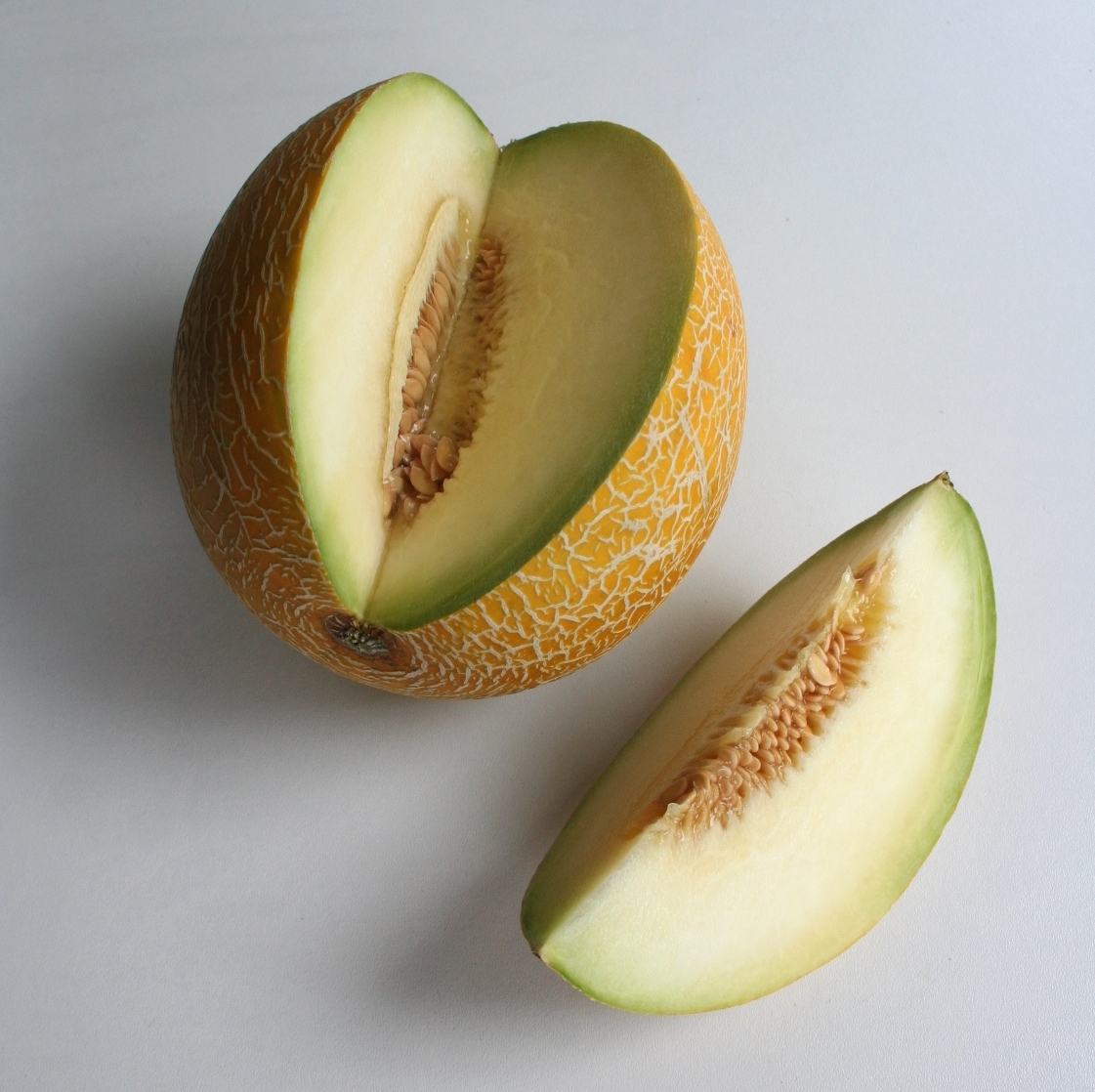
Galia melon
One of the more difficult produce-buying challenges is to pick a ripe melon. Even in late summer, when local muskmelons (canteloupes) and honeydews proliferate, selecting a ripe melon remains, at least to me, a crap shoot. I've read all about thumping, netting, color, smell and every other method of melon selection, but picking the perfect melon can still elude me.

It's even more of a challenge when local melons are not in season. But I still love them, so I'll frequently pick up a container of cut up mixed melons at Iovine Brothers Produce at the Reading Terminal Market. The out-of-season watermelons are almost always sub-par, but occasionally the canteloupes and honeydews are sweet and less than rock-hard.

So it was with trepedation that I picked up a Galia melon yesterday at Iovine's for $1.99. Today I cut it up this Israel-created hybrid now grown worldwide, especially Central America where this specimen came from. I detected only a little aroma from the melon, but the netting was distinct and developed, so I gave it a shot. Success! The Galia is sweet with subtle flavor, and soft, ripe flesh. It should hold up in its container in the fridge for two or three days, but my guess is it will be gone by tomorrow night.

My go-to fruit between apple and strawberry season in recent months has been pineapple. I buy the trimmed, ready-to-eat whole pineapples packed in plastic bags at Iovine's, and they hold up for more than a week in the fridge. I just knife slices off the top as I want them. With rare exceptions these pineapples have been sweet throughout, with no woody flesh.

Besides oranges, the only other fruit regularly in my diet over winter and early spring are frozen blueberries, particularly the "wild" low-bush "arboreal" berries from Canada and Maine. They have the same nutritional content and benefits as the commercial high-bush berries, but a slightly different flavor, which I prefer. I find the best deals on the frozen wild berries at Trader Joe's and usually consume them mashed into plain Greek yogurt.

Still, as much as I like these fruits, I look forward to the local berries; local strawberries should start appearing in farmers markets before the end of the month, given that most crops are running about a week or so behind normal after this year's harsh winter.

Today at Headhouse I picked up about a pound of rhubarb from Tom Culton. I stringed it (as you would celery), cut it into two-inch lengths then cooked it for about 15-20 minutes with a pint of water, half a cup of sugar, and the zest and juice from one juice orange. It's now in the fridge and I'll enjoy it for dessert after whisking the "soup" to break up the remaining soft chunks of rhubart and top it with some fresh whipped cream. The recipe comes courtesy of Mark Bittman.

Tuesday, May 06, 2014

Butcher Shop To Change Owners

Giunta's Prime Shop, operated by Reading Terminal Market veteran Charles Giunta for nearly eight years, will have a new owner soon. Rob Passio, who's worked for Giunta a few years, expects to take over as the new proprietor next month if all the paperwork moves as scheduled.

Passio, who started in the trade as a teen in South Philly, has worked for a number of butchers, including Charles' brother Martin's original Philadelphia sausage factory, now in South Jersey. (Martin also operates Martin's Quality Meats & Sausages at the RTM.) He's also put in time at one of the former Genuardi supermarket meat departments.

Rob plans no changes in meat sourcing and staffing at the stall, located in the aisle between Iovine Brother's Produce and L. Halteman Family Country Foods.

He does hope to slowly add some value-added items, like marinated meats. Passio also expects to wait a while before changing signage to reflect new ownership.


Sunday, February 23, 2014

RTM Opens Revamped Info Booth

Alan Segal at his post in the redesigned information both at the Reading Terminal Market
Original lithograph
The redesigned information booth opened last week to greet visitors at the Reading Terminal Market. A mural of the terminal's head house and train shed, as they appeared in 1893 when both opened, provides the main visual interest, from a lithograph published by George Moore & Co. of New York.

As far as Segal and other information booth volunteers are concerned, the best features relate to their comfort. There's an electrical outlet under so a portable heater can be used, since the booth's position by the 12th Street entrance near Filbert can be quite cold in the winter. A glass plate helps screen at least some of the cold wind when the doors open.

Thursday, February 20, 2014

Signs of Spring


Beyond today's balmy temperatures there's another sign of spring: stores are stocking Easter candy. Here's the Zitner's selection at the Pennsylvania General Store at the Reading Terminal Market.

Monday, February 17, 2014

Winter Vegetable, Hungarian Accent


Green cabbages at Iovine Brothers' Produce
It's soup weather, an ideal vehicle for that sturdiest of winter vegetables: cabbage. It's cheap, easy to prep, nutritious and satisfying.

First, let's deal with price. At the Reading Terminal Market today OK Lee had a special on green cabbage, 39 cents a pound -- half the price Iovine Brothers was charging, although even at 79 cents cabbage will hardly bust a budget. (Red and savoy cabbages are a tad more expensive: this week they were 99 cents at Iovine.)

I found a small cabbage weighing in at a pound and a half (most heads of green cabbage are between two and three pounds) and decided an Eastern European style soup was the way to go. I found lots of recipes on the web, and they were fairly similar, but the one I settled upon -- with two significant tweaks -- is attributed to Mel Markon's, a defunct Jewish deli in Chicago with a credit to the recipe's original appearance in the December 1980 issue of Gourmet magazine.

In addition to scaling the recipe down from a three pound head of cabbage, I took advantage of some homemade Hungarian sausages made by a neighbor's father in Budapest and smuggled back here about four or five years ago. Yes, the sausage is that old, but I've been using it as a flavoring agent in soups and stews and have lived to tell the tale. It replaces the sweet paprika called for in the sausage-less original recipe (find it here), but you could use smoked paprika instead.

My second tweak beyond the sausage was to add some barrel sauerkraut lurking in the back of my fridge. I used about a cup, rinsed, because that's all I had. If I had a quart, I would have used it all.

The most expensive part of the recipe is the meat, since it calls for one and a half pounds of short ribs; I used a little over a pound since I was dealing with a lesser quantity of cabbage.

Finished soup
Start by putting 12 cups of water in your stock or soup pot, then adding the beef before turning the heat to medium high. Once the water starts bubbling, cut back the heat to maintain a steady but minimal simmer. Do not add salt or any other seasoning at this point. When the meat is tender (which might take about an hour) remove it to a platter and let it cool. Make sure to skim the surface of the stock as it cooks to remove scum, and after removing the meat also skim off any fat globules you can find on the surface. (If you wind up boiling rather than simmering the broth, the fat will be emulsified into it, and that's yucky.)

While the meat simmered I attacked the cabbage. After discarding the outer leaves and coring the cabbage I cut it into roughly one-inch pieces. A medium onion got the same treatment. Although the recipe doesn't call for it I added half of an exceedingly large carrot (about one medium carrot) cut into slightly smaller than spoon-sized chunks.

Next, remove the meat from the bone and cut away any identifiable unrendered fat and gristle, then cut the meat into small bits, half-inch at the most.

Take the meat and veggies and add them to the pot, along with three-quarters of a cup of ketchup, a cup of chopped, drained canned tomatoes, a quarter cup of sugar, and a quarter cup of lemon juice (cider or white vinegar could be used in a pinch). If you are fortunate enough to have Hungarian sausage (a Spanish chorizo or Portuguese chouriço would also work) chop up about two ounces worth and add it to the pot. With sausage there's no need for additional seasonings. If you have no suitable sausage go with four or five teaspoons of paprika, plus salt to taste.

The soup should gently simmer (only the barest of bubbles should break on the surface) for 30 to 60 minutes. But don't be tempted to cook longer: overcooking is what leads to cabbage emitting a sulfurous and off-putting odor.

Like many soups and braises it improves with an overnight stay in the refrigerator, which will also allow you to remove congealed fat that might accumulate on top. I froze about half of it and have been enjoyably consuming the remainder. With a slice of good rye bread or pumpernickel and sweet butter you've got yourself a great meal.


Market's New Website Goes Live

The revamped website for the Reading Terminal Market went live last week. While there are plenty of tweaks still needed and the overall organizational structure of the site isn't ideal, it's a far sight better than the previous iteration, which was not updated as merchants were added.

The most important improvement (beyond the fact that the merchant list is up to date) is that the site is mobile-friendly.

Another addition is the ability to search for a product and determine which vendors sell it. Though useful, this function is hardly perfect, since it depends upon each merchant keeping the market informed of its product line, and the market updating the database. For example, search for "chocolates" and you'll be told to try the Pennsylvania General Store and Wursthaus Schmitz, but not Sweet as Fudge or Chocolates by Mueller. But search "chocolate" and you won't get the first two although you'll get the latter two, as well as Famous 4th Street Cookie and Old City Coffee. Go figure.

Just like the old site, you can read the market's Mission Statement and Operating Policy Guidelines. But good luck finding them. The logical place would be under the "About the Market" menu heading, but that item is filled with directions and parking info along with a link to pages about the market's history. Instead, if you want to read the Mission Statement and OPG you have to click on "Contacts" where there are further links to those two items. Hardly logical or user friendly.


Thursday, August 09, 2012

Food factory: Reading Terminal Market

When Valley Shepherd Creamery's owner, Eran Wajswol, went to government agencies seeking permits for his forthcoming store and cheese-making operation at the Reading Terminal Market, he discovered a zoning variance was required to permit food manufacturing.

It wasn't only a surprise to Wajswol. It seems that any number of vendors were manufacturing food at the market in violation of the zoning regulations. (Among them: Miller's Twist, Old City Coffee, Sweet as Fudge Candy Shoppe, Famous Fourth Street Cookie, Mueller's Chocolates, Beiler's Bakery, Flying Monkey, Martin's Quality Meats, Giunta's Prime Shop, Pennsylvania General Store, and Herschel's East Side Deli.)

To solve the problem, the market applied for a single zoning variance to cover the entire premises. That variance is now in hand, legalizing all the food-manufacturing operations, which are distinct from restaurant operations.

Valley Shepherd still has to obtain other approvals from the Pennsylvania Department of Agriculture and the city's Board of Health, but it has its building permit. This week the large tank which will contain the milk which will become cheese was delivered to the market. It will be installed in the basement and the liquid will be pumped to the cheese-making room within the shop.

Valley Shepherd hopes to be open for business sometime in September.

Other new vendors also are making progress on their stalls.

The first to open likely will be the Head Nut, which this week is receiving deliveries of stock. They plan to be open sometime next week.

The Tubby Olive plans an Aug. 24 opening for the sale of bulk olive oils and vinegars.

Wursthaus Schmitz begins construction next Monday of its space behind Flying Monkey; the contractor says it will take a month.

Sunday, July 01, 2012

Pot Pie Savings

Chicken and turkey pot pies are more of an autumn or winter thing for me, but if you enjoy them in the summer. you can safe $1.75 on a small pie if you head over to Martin's Quality Meats in the Reading Terminal Market. Where Fair Food sells the small pies for $12.50, Martin's asks $10.75, iirc.

Lobster Tales at Reading Terminal Market

New neon sign on John Yi Fish Market let's you know they've got live lobsters
Live lobster at John Yi
John Yi Fish Market has got live and cooked lobsters, but no lobster tank, at least not yet. Golden Seafood has a new tank, but it isn't filled. Both intend to rectify their respective situations soon.

Live lobsters are once again regularly available at the Reading Terminal Market, something that hasn't happened since Coastal Cave closed with its owner's retirement April 1.

At $11.99 a pound, John Yi's lobsters are a trifle dear, but that's pretty much the standard once you get away from the Maine and Nova Scotia coasts. In Portland, Maine, last week, 1-1/8 pounders were selling for $3.99 at wharfside fish markets, 1-1/2 pounders $4.99, some of the lowest prices in years for softshell (newly molted) lobsters, which are more common that hardshells during the summer months. (And no, you can't eat the shell of softshells as you can softshell crabs.)

Wednesday, June 27, 2012

More Random Notes on Reading Terminal Market Celebration

It's time to play catch-up with the remaining events at last week's Avenue D Renovation Celebration at the Reading Terminal Market.

Eran Wajswol
Rick Nichols, who planned much of the week's programs along with market officials was quite proud of the title he gave to last Thursday's noontime talk by Eran Wajswol of Valley Shepherd Creamery:

What a Friend We Have in Cheeses

Wajswol, a late-comer to commercial cheese-making after a career as an engineer for nuclear power plant cooling systems, will be joining the list of market vendors this fall when he opens up his shop along Avenue D, where he'll not only sell and serve cheese (serving in the form of cheese paninis), but make it, too. He'll use cow milk from regional dairies (Delaware Valley College's and University of Pennsylvania's veterinary school are likely, but he's got others under consideration) to produce at least one cheese at the terminal, in full view of customers. "Reading Cheddar" will be his first cheese, but you won't be able to buy it for at least eight to twelve months after it's made: that's how long it will take to age in the market's basement where he'll have his aging room as well as milk storage tank. He's also considering making a Stilton-like cheese, and perhaps a fresh mozzarella.

Terrence Feury works salmon as Rick Nichols comments
Ellen Yin of Fork was joined by her long-time, but soon-to-be-gone chef, Terrence Feury, for a fish demonstration Friday at noon.

It's unfortunate that in the demonstrate Feury used a fish that's hard for the retail customer to come by: a salmon trout from Loch Duart in Scotland. This farm-raised fish is of superb quality, much better than the typical farm-raised Atlantic salmon. But it's impossible to find in fish stores, and exceedingly pricey even at the wholesale level. Even domestically raised salmon-trout, also known as steelhead, can be difficult (but not impossible) to find in retail stores in the Philadelphia area.

That said, Feury made a tasty dish that could easily be replicated, if not for the fish, at home. (I'd recommend doing it with Alaska king or sockeye salmon, now in season.) Cut a skinned filet into small serving pieces, about 2 ounces and lightly sprinkle with a mix of equal amounts of kosher salt and sugar, then let sit for about 20 minutes. The pieces then get very lightly sautéed in a lightly oiled pan (just warmed through, not cooked, hence the need for the best possible fish), then served with a lemon-oil emulsion (equal parts juice and olive oil, emulsified in the blender). He accompanied the fish with a melange of tiny cubes of cucumber, sun-dried tomato, in a sauce made with verjus and olive oil.

Yin and Feury's presentation was well attended, and among those watching was a Philadelphia restaurant luminary from the past: Kathleen Mulhern. She was another contributor to the city's restaurant renaissance in the 1970s with The Garden, which lasted from 1973 until early in the new millenium.

Jeremy Nolan makes sausage
Sausage, sauerkraut and beer was the focus of Doug Hager, proprietor of Brauhaus Schmitz, and his executive chef, Jeremy Nolan, at Friday's 5 p.m. demonstration. This summer they plan to open their retail outpost at the RTM, Wursthaus Schmitz, where they'll sell sausages for cooking at home, German deli meats, and grocery items imported from the old country. Sausages and salad items they don't make in their own kitchen at the South Street restaurant (now being expanded) will come from Rieker's, the emporium of all goods German in Fox Chase.

As Nolan operated the gleaming sausage stuffer, after mixing ground pork with appropriate seasonings to make bratwurst, Hager, born in northern Bavarian to an American father and German mother, poured the beer. And they weren't tiny samples, either! The beer and cooked brats were accompanied by a sauerkraut (based on imported German wine kraut, but doctored up by Nolan with beer, juniper berries and other seasonings), and German potato salad.

Anna Florio (left) and Aliza Green
On Saturday at noon, in the week's final demonstration, Aliza Green, the first chef at White Dog Cafe, consultant to many Philadelphia restaurants, and inveterate cookbook author, demonstrated how to use ingredients found at the market with Anna Florio, proprietor of La Cucina at the Market, the demonstration kitchen where she conducts classes and food-related events.

The centerpiece was handmade pappadelle pasta: she kept on saying how easy it was, but her kneading and rolling obviously required plenty of elbow grease, even if the technique was simple. Although she had semolina for dusting, the primary flour was Daisy, from a mill in Annville, Pennsylvania, which started in 1740. She said the low-protein, extra finely milled flour is ideal for pasta because it easily rolls out and results in soft, tender pasta that readily absorbs sauce or broth. While Green tended to the pasta, Florio worked wonders with zucchini (bought from Iovine's) in the sauté pan. The pasta was served with a simple olive oil sauce enlivened by garlic scapes.


Friday, June 22, 2012

Bargains, Rarities at Reading Terminal Market

Frying peppers, cheap
If there's a pepper surplus when the season comes to a close, you might see frying peppers sell for as little as 50 cents a pound. But that's then. Now you can buy them at Iovine Brother's Produce for 89 cents a pound, a clear bargain since just a month or so they were priced as high as $1.99.

I couldn't resist buying a bunch, as well as Italian sausage from Martin's Quality Meats at the Reading Terminal Market. Sauté the peppers with some onions, cook the sausage, and put it all on a good hoagie roll and you've got a fine meal. All the basic food groups are covered except beer.

Peaches have made an early arrival at the market. Benuel Kaufman has some early varities for $2.49/pound, while Halteman is selling them for $2.19. Other good buys at Halteman's: blueberries $3.29 a pint (though Iovine's has Jerseys at $1.99), black raspberries $4.99/pint, sweet cherries $5.99/quart.

Iovine has donut peaches (I didn't ask, but I expect they're from California) for 99-cents pound. They also have a good deal on Vidalia onions, 50 cents pound (normally anywhere from 69-cents to a buck).

Ben Kauffman's Lancaster County Produce boasts another produce item that's a few weeks earlier than normal: corn. I'll pass on that for another week or two, but I can't resist his long, red beets which I find sweeter than the more traditional round beet.

The best deals on cherries I've seen has been at the Fair Food Farmstand, where sour pie cherries have been going for $6/quart, nearly three bucks less than Ben Kauffman asks. I turned two quarts into sorbet last week. Buy them now, because the sour cherry season is incredibly short.